TypeScript
Default for frontends and Node backends.
Open to full-time roles and freelance work
Web, desktop, cloud, and AIBook a call → 3+ years shipping to production
Core technologies: Rust, Tauri, TypeScript, Next.js, Nest.js, Python, FastAPI, SvelteKit, Astro, PostgreSQL, Redis, Qdrant, AWS, Terraform, Docker, Socket.IO, OpenAI API, Hugging Face, Stripe, Paddle, Tailwind CSS.
A whole product, or the one hard part of it. Each one links to the projects where I've done it.
Fast, secure web platforms, from the first screen to payments, accounts, and real‑time features.
See 5 projects→Cross-platform apps in Electron or Tauri: small installers, offline sync, and deep OS integration.
See 2 projects→AWS defined in Terraform, with private networking, keyless CI/CD, and access that follows your team.
See 4 projects→Practical features on the OpenAI API, from content generation to assistants built into your product.
See 2 projects→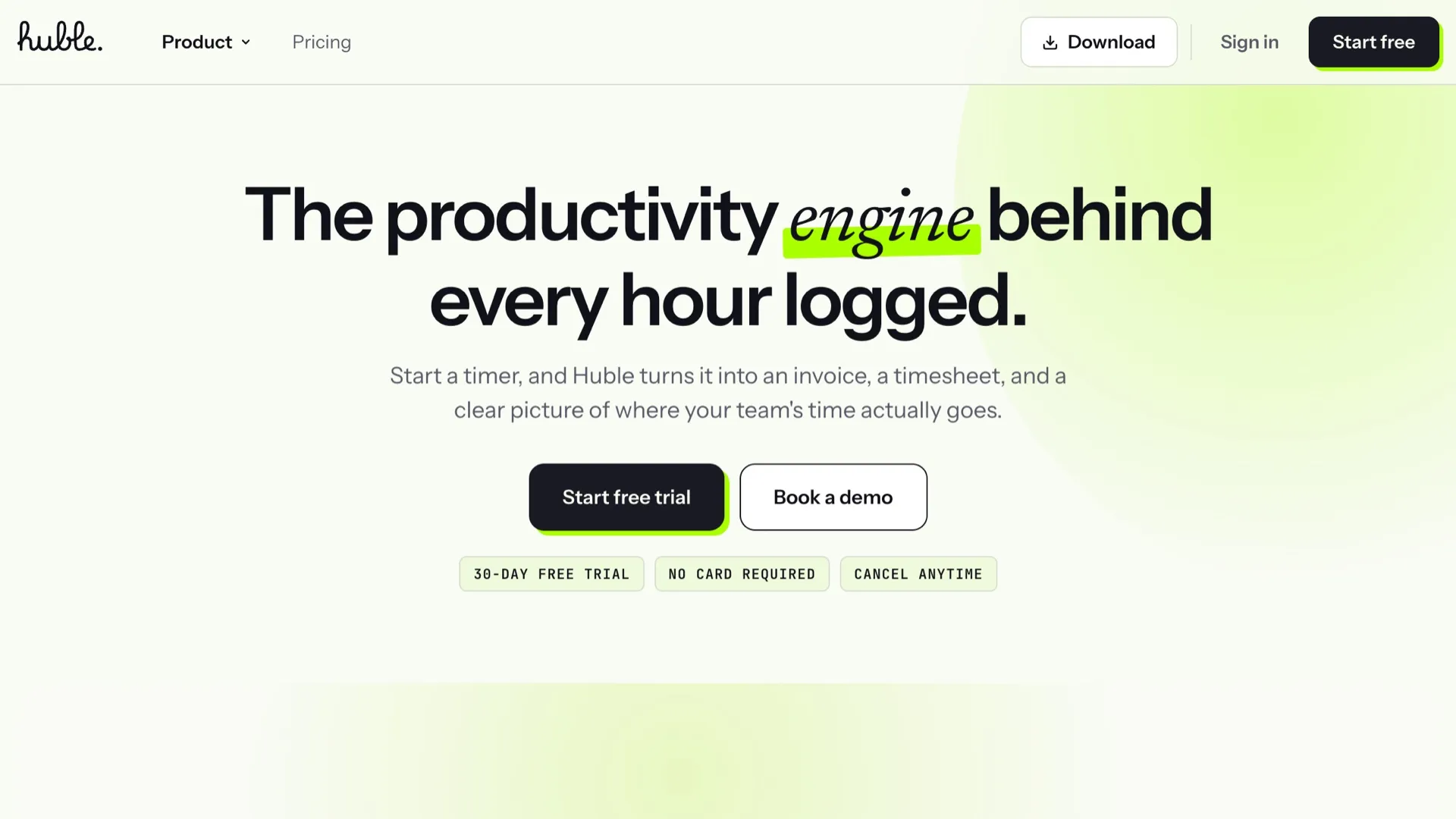
Full-stack · Software engineer
Time tracking and invoicing for teams. I lead development across the whole product, rebuilt the desktop tracker in Rust (130 MB down to 30 MB, with offline sync), and built its Paddle billing, real-time backend, and security-first infrastructure.
Read case study →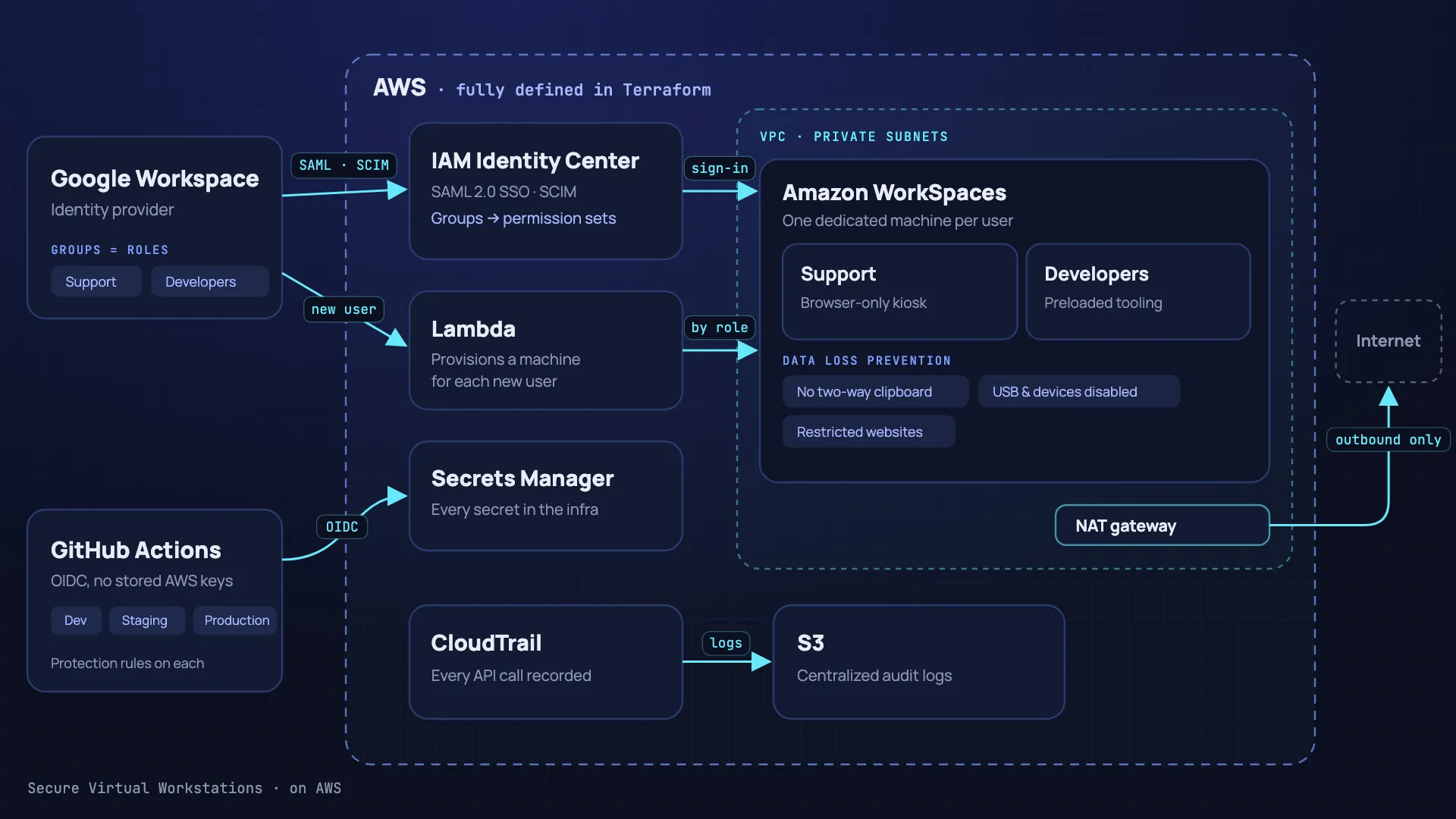
Cloud & security · Cloud architect
Secure virtual workstations on AWS, fully defined in Terraform. Adding someone to Google Workspace gives them a locked-down machine and the right AWS permissions for their role, automatically, all inside a private VPC with keyless OIDC deployments.
Read case study →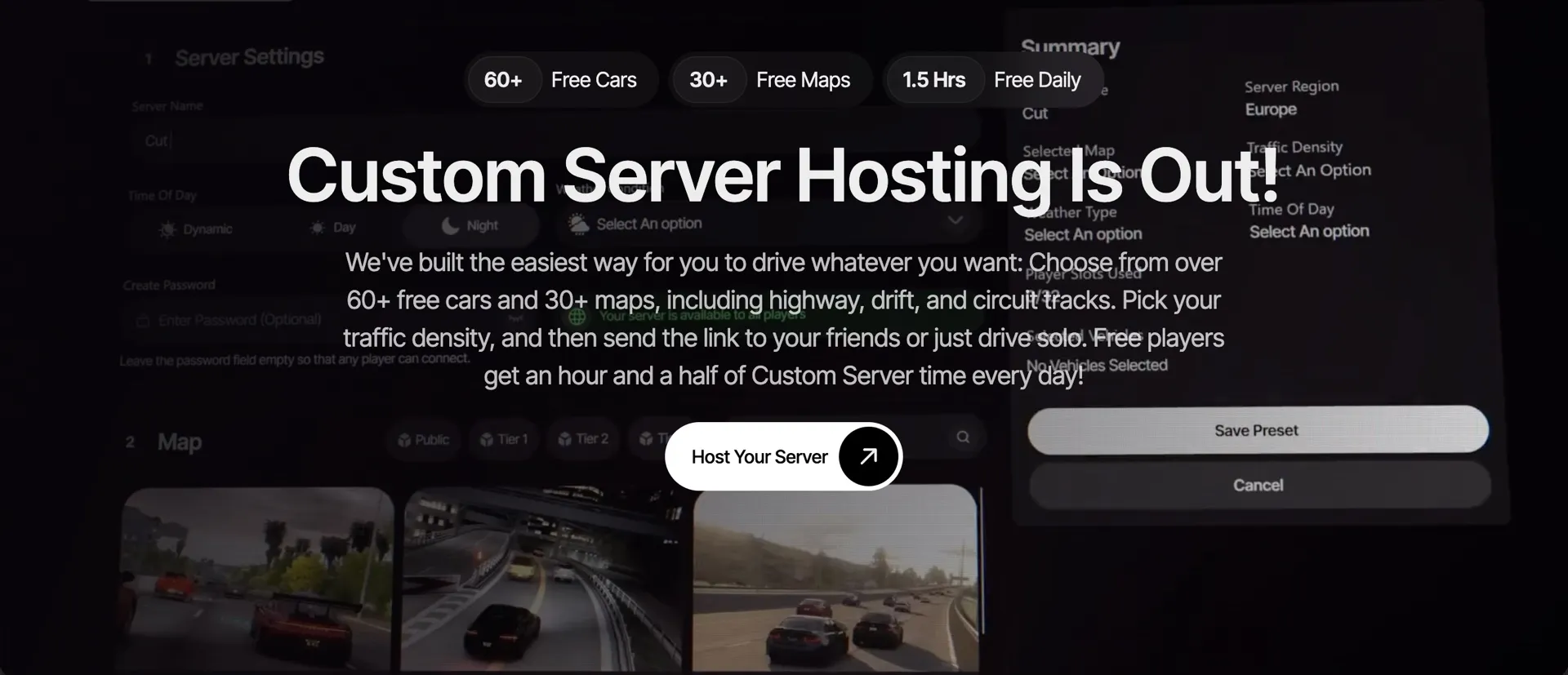
Full-stack · Lead developer
The platform behind No Hesi's modded Assetto Corsa servers and its 200K+ member racing community. I led it through two migrations and built its desktop launcher, in-game chat overlay, league badges, and Discord-synced subscriptions.
Read case study →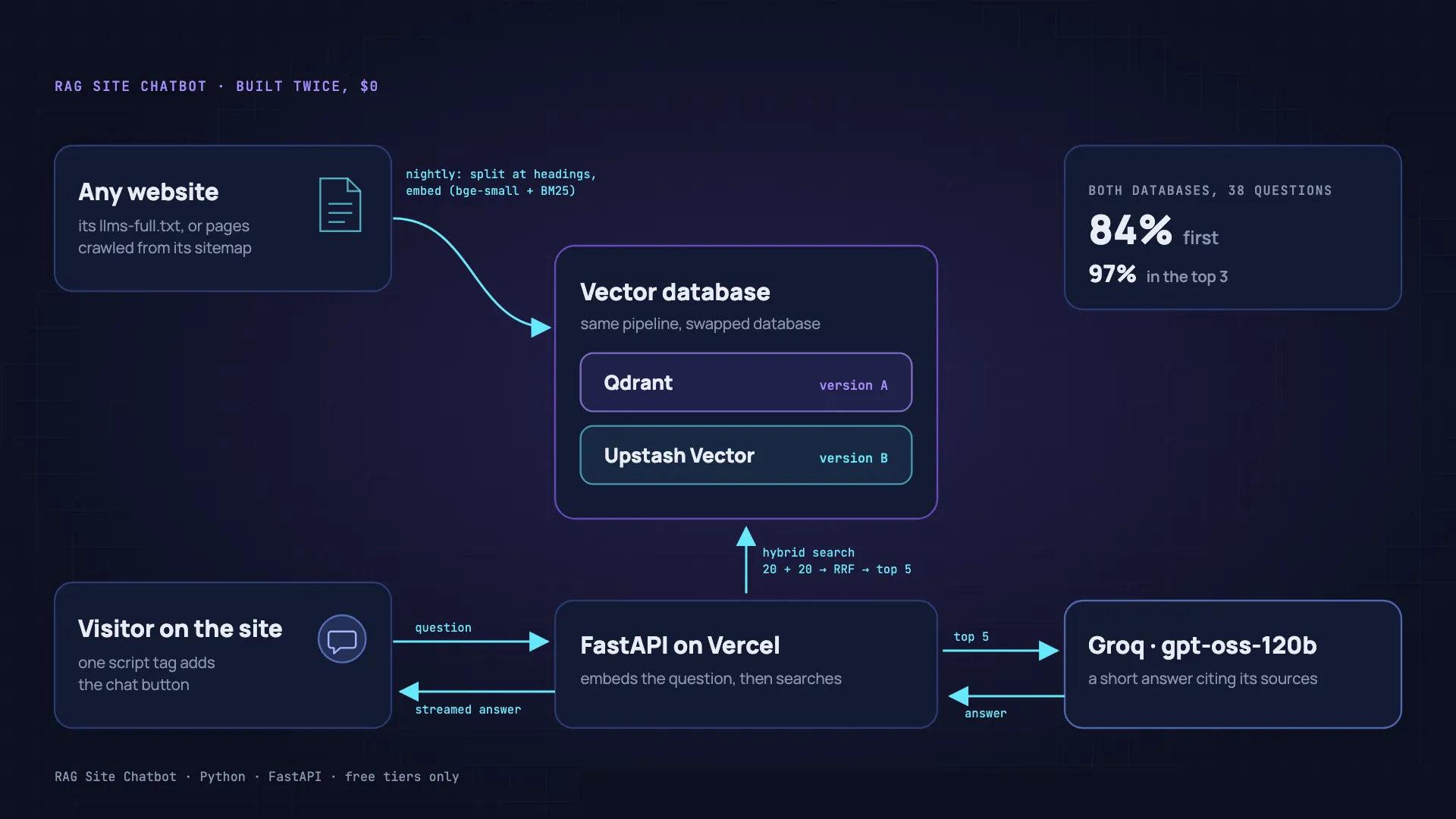
AI · Sole developer
A $0 chatbot that answers questions about any website from that site's own content, cites its sources, and drops into any site with one script tag. I built it twice, on Qdrant and on Upstash Vector, to see what the vector database really changes.
Read case study →Default for frontends and Node backends.
The core of Huble’s desktop tracker since the move off Electron.
Small, fast, locked-down desktop apps with a Rust core.
The runtime under most of my APIs.
My default relational database, and what Huble runs on.
Backs BullMQ queues at scale, kept on a private network.
Servers and the self-hosted CI runners that build our apps.
Every change goes through a reviewed pull request.
Custom agents that speed up development and review pull requests.
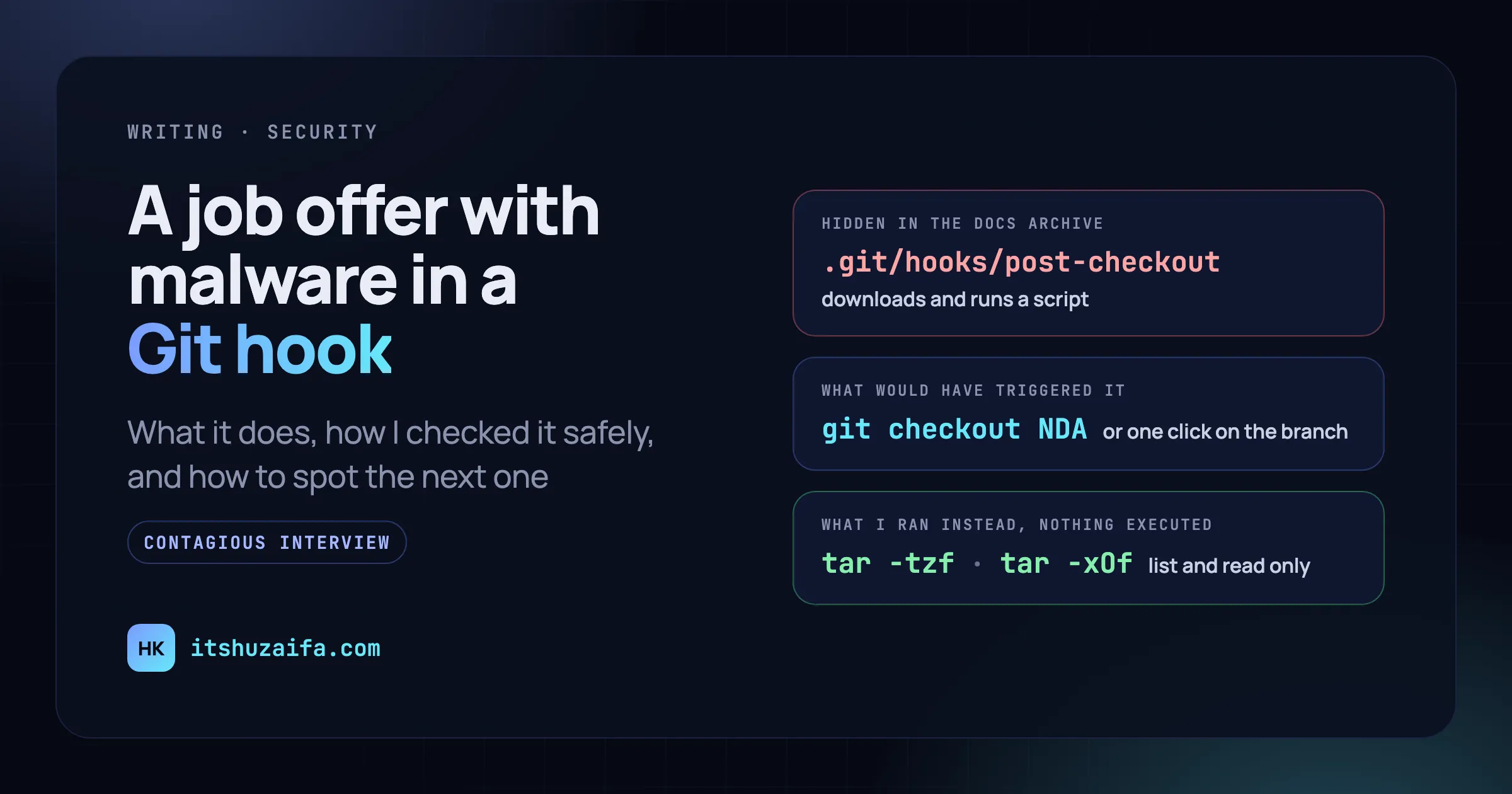
A recruiter sent me a documentation pack for a blockchain game's website. Inside its .git folder was a hook that would download and run a script the moment anyone checked out its NDA branch. How I inspected it without running anything, what the hook does, the known campaign it matches, the checks to run on anything a recruiter sends you, and a free app that runs them for you.
The latest wave of the Shai-Hulud worm has published over 2,300 infected versions of 490 npm packages. What one install does, why it now plants a Claude Code hook next to a VS Code task, how I checked 1,831 installed packages and 47 GitHub repos without installing anything, and a free scanner to check yours.
Oct 2026 · 10 min read · AITwo readers of my Qdrant vs Upstash post suggested three fixes. Re-index only what changed, put a date on every passage, and keep a list of the questions the site answers poorly. I built all three and measured before and after.
All posts →Short answers to what clients and hiring teams usually ask first.
Products that need someone across the stack: web platforms with Next.js, SvelteKit, and Nest.js, desktop apps in Electron or Tauri, AWS infrastructure in Terraform, and AI features built on the OpenAI API. I do my best work owning a feature or a whole product end to end.
No. I started with MERN, and projects have since taken me into relational databases, desktop apps, Python and AI, and cloud infrastructure, so I pick tools for what the product needs rather than out of habit. If you already have a stack, I’ll work in it; if you’re starting fresh, I’ll recommend one and explain why. The Stack page lists everything I use and how well I know each.
Yes. I’m open to full-time roles, either remote or on-site, and I’m happy to relocate for the right one. I also take on freelance projects. Send me the role and a bit about the team, and I’ll get back to you.
I’m in Pakistan (UTC+5). I keep a few hours of overlap with US and European working days for calls, and work async the rest of the time. Use “Book a call” to pick a slot; times show in your own time zone.
Either way works: a fixed price for well-scoped projects, or hourly for ongoing and open-ended work. Tell me what you’re building and I’ll suggest the better fit.
Through whatever your team already uses, like Slack or email, with regular progress updates and demos of working software rather than long status reports.
You own everything I build for you, and I’m happy to sign an NDA before we get into details.
Yes. I can stay on for fixes, monitoring, and new features after launch, either as ongoing hourly work or a monthly retainer.
Open to full-time roles and freelance work. Pick whatever’s easiest.